Night leg cramps and restless legs are two different problems that both wreck sleep, and both get blamed on low vitamins. The research splits them cleanly. For cramps, the strongest result belongs to vitamin K2, not vitamin D: in a placebo-controlled trial of 199 adults aged 65 and older, a daily 180 μg capsule of menaquinone 7 cut the weekly number of night cramps while the placebo group did not improve [1]. Vitamin D, given to postmenopausal women until their blood levels were replete, had no effect on muscle cramps [2]. For restless legs, low vitamin D levels show up again and again in people with the condition [3], yet a placebo-controlled trial of high-dose vitamin D did not improve symptoms [4]. Below is what each study tested, who was in it, and what it does and does not tell a woman taking a combined D3 and K2 supplement.
Key Takeaways
- In 199 adults aged 65 and older with night leg cramps, menaquinone 7 at 180 μg a day for 8 weeks lowered the weekly cramp count to 0.96, while the placebo group was at 3.63 [1].
- The journal retracted and replaced that trial report after questions about how withdrawals were reported [5]; the cramp figures on this page are unchanged in the replacement.
- In a trial of two hundred thirty postmenopausal women with vitamin D insufficiency, correcting it had no effect on muscle cramps over 1 year [2].
- People with restless legs have lower vitamin D levels on average [3], but in a 12-week placebo trial, weekly 50,000 IU vitamin D did not reduce restless legs severity [4].
Two Different Leg Problems
A night leg cramp is a sudden, painful tightening of a muscle, usually in the calf, that wakes you up and can leave the muscle sore the next day. Restless legs syndrome is different. It is an urge to move the legs, often with crawling or aching sensations, that builds up when you sit or lie still and eases when you move. Cramps are a muscle event. Restless legs is a neurological condition. Both become more common with age, and both interrupt sleep, which is why they often get lumped together.
That distinction matters here because the two conditions have been tested with different nutrients and have produced different answers. The cramp evidence centres on vitamin K2. The restless legs evidence centres on vitamin D. No trial in this article tested the combined D3 and K2 product that most readers of this site take, so each study is described by what it actually gave.
The Vitamin K2 Trial for Night Leg Cramps
The trial that drew attention to K2 was run at several centres in China with community-dwelling adults aged 65 and older who had at least 2 documented night cramps during a 2-week screening period [1]. Of 310 people screened, 199 were enrolled, and 108 of them were women. They took either a capsule of menaquinone 7 at 180 μg or a matching placebo every day for 8 weeks [1].
At the start, both groups had about the same number of cramps per week, 2.60 in the K2 group and 2.71 in the placebo group [1]. Over the 8 weeks, the K2 group fell to 0.96 cramps per week, while the placebo group stayed high at 3.63 [1]. The researchers reported a between-group difference of 2.67 fewer cramps a week [1]. Cramps in the K2 group also became less severe and shorter, and no adverse events related to vitamin K2 were identified [1].

The same research group had earlier tested K2 in people on hemodialysis, where cramps during treatment are common and hard to prevent. In a crossover pilot trial, nineteen patients who started on K2 and 20 who started on placebo completed alternating phases of vitamin K2 at 360 µg a day and placebo [6]. K2 reduced the frequency, duration and severity of cramps, and the cramps came back after patients crossed over to placebo [6]. That is a very different population from healthy older adults, but it is the reason the larger trial was designed [7].
Two cautions apply. The cramp trial has a published notice of retraction and replacement from the journal [5], so the article was formally reissued after first publication. And it is one trial, in one country, in people older than most readers of this site. A family medicine journal summarised it under the headline that K2 is effective for night leg cramps [8], but a single trial is a start, not a settled answer.
Vitamin D Did Not Help Cramps in Postmenopausal Women
The vitamin D question has been tested directly in the group this site writes for. A randomized, double-blind, placebo-controlled trial in the Midwest enrolled two hundred thirty postmenopausal women whose blood levels of 25-hydroxyvitamin D were insufficient at the start, between 14 and 27 ng/mL [2]. Over the year, the women recorded how often they had muscle cramps and how bad they were at 6 visits [2].
More than half the women, 121 of them, reported cramps during the trial [2]. Despite unequivocal vitamin D repletion, vitamin D had no effect on muscle cramps [2]. What did predict cramps was pain, disability and dietary potassium, and women who were more physically active had less severe cramps [2]. This was a post hoc analysis, meaning cramps were not the trial’s main question, but it is the only placebo-controlled vitamin D evidence on cramps in postmenopausal women found for this page.
Magnesium is the supplement most often suggested for cramps, and the evidence there is also disappointing. A Cochrane review of 11 trials found that for idiopathic cramps, mostly in older adults presumed to have night leg cramps, magnesium made little difference to cramp frequency compared with placebo [9]. The reviewers concluded that magnesium is unlikely to provide clinically meaningful cramp prevention for older adults [9].

Restless Legs and Vitamin D
Low vitamin D keeps turning up in people with restless legs. A meta-analysis of 36 observational studies with 9590 participants found serum vitamin D was significantly lower in people with restless legs than in those without it [3]. A later meta-analysis of 59 studies of vitamins and restless legs agreed, finding lower vitamin D levels in both primary and secondary restless legs [10].

Treatment trials tell a different story. In a 12-week randomized trial, thirty-five people with restless legs took either 50,000 IU of vitamin D or a placebo once a week, under direct observation [4]. Vitamin D did not significantly change restless legs severity compared with placebo, and the authors concluded that supplementation does not improve symptoms [4]. When the treatment trials were pooled, oral vitamin D did not improve primary restless legs, while vitamin B6 did [10]. A separate systematic review of 10 supplement trials reached the same verdict on vitamin D and noted that magnesium oxide and vitamin B6 improved symptoms and sleep [11].
One trial in women is worth knowing about. In 141 middle-aged women with premenstrual syndrome, abdominal obesity and vitamin D deficiency, the authors reported lower restless legs severity after low-fat milk and yogurt fortified with vitamin D3 in the women with severe PMS [12]. Compared with the plain dairy group, though, restless legs scores did not differ significantly in any PMS subgroup [12]. That is a narrow, subgroup finding, not a general result.
A review of supplement trials also found promising results for oral iron in restless legs, with problems of compliance and absorption [11]. Anyone with new or worsening restless legs should have iron studies checked by a clinician before assuming a vitamin is the answer.
Sleep Quality Is a Separate Question
Both conditions are partly sleep problems, so it is fair to ask whether vitamin D helps sleep in general. A meta-analysis of intervention studies found that vitamin D supplementation lowered scores on the Pittsburgh Sleep Quality Index compared with placebo, a sign of better sleep quality, with moderate certainty of evidence [13]. The same review found that results on sleep disorders and restless legs were not unanimous [13]. Better sleep quality overall is not the same as fixing cramps or restless legs.

What This Means for a D3 and K2 Supplement
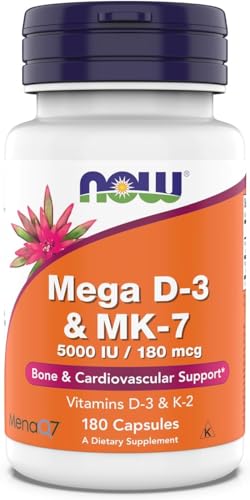
The K2 trial used menaquinone 7 at 180 μg a day, which matches the K2 amount in some combined D3 and K2 products. A combined product adds vitamin D3, which on the evidence above is not what eases cramps. Nobody has tested whether the combination works better or worse than K2 alone for cramps.
Vitamin K2 affects blood clotting proteins. Anyone taking warfarin or another vitamin K antagonist should not start a K2 supplement without talking to the prescriber, because it can change how the drug works. Frequent cramps can also be a sign of medication side effects, low potassium, kidney disease or nerve problems, and those deserve a medical check rather than a supplement trial.

Bottom Line
For night leg cramps, the most direct evidence favours vitamin K2: one placebo-controlled trial in adults aged 65 and older found menaquinone 7 at 180 μg a day cut weekly cramps, though the report was formally retracted and replaced by the journal and has not yet been repeated elsewhere [1]. Vitamin D did not help cramps in postmenopausal women [2], and it did not improve restless legs in a placebo-controlled trial despite the link between low levels and the condition [4]. If you already take a D3 and K2 product, the K2 part is the piece with cramp data behind it. If you take warfarin, check with your prescriber before adding K2.
Frequently Asked Questions
Does vitamin K2 stop night leg cramps?
In one placebo-controlled trial of 199 adults aged 65 and older, menaquinone 7 at 180 μg a day lowered weekly cramps to 0.96 versus 3.63 on placebo over 8 weeks [1]. It is a single trial in older adults, and the journal issued a notice of retraction and replacement for the report [5], so the result needs repeating before it is treated as settled.
Will vitamin D help my leg cramps?
The evidence says probably not. In a trial of two hundred thirty postmenopausal women with vitamin D insufficiency, correcting the deficiency had no effect on muscle cramps [2]. Pain, disability and dietary potassium predicted cramps better than vitamin D did in that study [2].
Can vitamin D treat restless legs syndrome?
People with restless legs tend to have lower vitamin D levels [3], but a 12-week placebo-controlled trial of weekly high-dose vitamin D did not improve symptoms [4]. Pooled trials found no benefit from vitamin D for primary restless legs [10]. Iron status is worth checking with a clinician first.
References
- Tan J, et al. Vitamin K2 in Managing Nocturnal Leg Cramps: A Randomized Clinical Trial. JAMA internal medicine (2024). PMID 39466236
- Weiker MK, et al. Muscle Cramps Do Not Improve With Correction of Vitamin D Insufficiency. WMJ : official publication of the State Medical Society of Wisconsin (2017). PMID 29357208
- Mansourian M, et al. Are serum vitamin D, calcium and phosphorous associated with restless leg syndrome? A systematic review and meta-analysis. Sleep medicine (2020). PMID 32950014
- Wali SO, et al. Efficacy of vitamin D replacement therapy in restless legs syndrome: a randomized control trial. Sleep & breathing = Schlaf & Atmung (2019). PMID 30430372
- Tan J, et al. Notice of Retraction and Replacement. Tan and Zhu. Vitamin K2 in Managing Nocturnal Leg Cramps: A Randomized Clinical Trial. JAMA Intern Med. 2024;184(12):1443-1447. JAMA internal medicine (2025). PMID 40314950
- Xu D, et al. Vitamin K2 as a potential therapeutic candidate for the prevention of muscle cramps in hemodialysis patients: A prospective multicenter, randomized, controlled, crossover pilot trial. Nutrition (Burbank, Los Angeles County, Calif.) (2022). PMID 35203045
- Li Y, et al. Effect of vitamin K2 in the treatment of nocturnal leg cramps in the older population: Study protocol of a randomized, double-blind, controlled trial. Frontiers in nutrition (2023). PMID 36908924
- Shaughnessy AF. Vitamin K2 Is Effective to Decrease Nocturnal Leg Cramps. American family physician (2025). PMID 40834386
- Garrison SR, et al. Magnesium for skeletal muscle cramps. The Cochrane database of systematic reviews (2020). PMID 32956536
- Xu XM, et al. Role of vitamins in the pathogenesis and treatment of restless leg syndrome: A systematic review and meta-analysis. PloS one (2025). PMID 40063620
- González-Parejo P, et al. Effects of Dietary Supplementation in Patients with Restless Legs Syndrome: A Systematic Review. Nutrients (2024). PMID 39064758
- Sharifan P, et al. Effect of dairy products fortified with vitamin d3 on restless legs syndrome in women with premenstrual syndrome, abdominal obesity and vitamin d deficiency: a pilot study. BMC women’s health (2024). PMID 39080634
- Abboud M. Vitamin D Supplementation and Sleep: A Systematic Review and Meta-Analysis of Intervention Studies. Nutrients (2022). PMID 35268051
These statements have not been evaluated by the FDA. This product is not intended to diagnose, treat, cure, or prevent any disease.
These statements have not been evaluated by the Food and Drug Administration. This information is not intended to diagnose, treat, cure, or prevent any disease. Content is for informational purposes only and is not medical advice; consult a qualified healthcare provider before starting any supplement. As an Amazon Associate we earn from qualifying purchases.
