FTC Disclosure: This article may contain affiliate links. If you make a purchase through these links, we may earn a small commission at no extra cost to you. This helps support our research and content creation.
Vitamin D3 and vitamin K2 were discovered decades apart, studied in almost entirely separate research traditions, and only relatively recently understood as working parts of the same calcium-routing system. Tracing that history explains why the combination product on shelves today looks the way it does.
Vitamin K’s Early Identity: A Clotting Factor, Not a Bone Nutrient
Vitamin K was discovered in the 1930s through its role in blood coagulation, hence the K, from the German Koagulation. For decades, K vitamins were studied almost exclusively by hematologists and were relevant clinically mainly for newborns, surgical patients, and anyone on anticoagulant medication. Its connection to bone metabolism was not the initial research focus at all.


The Slow Recognition of a Bone Role
That began to change as researchers examined vitamin K’s biochemistry more closely and identified its role activating Gla-proteins, including osteocalcin in bone [1]. This shifted vitamin K from a purely hematological nutrient to one with an independent skeletal function, worth studying on its own terms rather than only as a clotting factor.
Early Comparative Trials Against Established Osteoporosis Therapies
One of the earliest longitudinal studies in this space, published in the late 1990s, directly compared vitamin K2 supplementation against vitamin D3 alone and against estrogen-progestin hormone therapy for bone mineral density in postmenopausal women [2]. At the time, hormone therapy was the dominant clinical approach to postmenopausal bone loss, so measuring K2 against it, rather than against a simple placebo, was a notably ambitious comparison for the era.
Menaquinone Structure Research Refines Which Form Matters
As the field matured, researchers moved from simply testing vitamin K2 to understanding differences among its menaquinone subtypes. Structural research examining how phylloquinone (K1) and different menaquinones (MK-4, MK-7) each bind to VKORC1, the enzyme complex vitamin K interacts with, helped explain why MK-7’s longer side chain produces meaningfully different pharmacokinetics than MK-4, despite both being classified as vitamin K2 [3].
The Synergy Concept Emerges
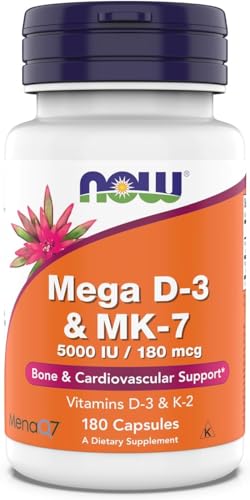
By the 2010s, researchers began explicitly framing D and K as pleiotropic nutrients whose skeletal and cardiovascular relevance depended on each other, rather than treating them as two unrelated supplements that happened to both be good for bones [4]. This reframing is what eventually produced combination formulas as a distinct product category rather than D3 and K2 sold only separately.
Where the Research Stands Now
Recent reviews continue to build on that synergy framework, examining the shared calcium-routing pathway in more mechanistic detail and asking how supplementation strategies should account for both nutrients together rather than optimizing each in isolation [5]. The combination product available today is the result of that decades-long convergence of two originally separate research traditions.

These statements have not been evaluated by the FDA. This product is not intended to diagnose, treat, cure, or prevent any disease.
Frequently Asked Questions
Q1: Were D3 and K2 always sold together?
A1: No. For most of the twentieth century they were studied and sold separately, D3 for bone and immune support, K2 primarily for blood clotting. Combination formulas are a relatively recent product category, following research establishing their interdependent mechanism.
Q2: Why is MK-7 more common in modern products than MK-4?
A2: Structural and pharmacokinetic research clarified that MK-7’s longer half-life supports more sustained activation of Gla-proteins with once-daily dosing, which became a practical advantage for supplement formulation.
Q3: Is the synergy concept settled science or still evolving?
A3: It is an active and evolving area. The core mechanism, D3 driving calcium absorption and K2 directing its use, is well established, but exactly how supplementation strategies should be optimized continues to be refined.
References
- Effects of vitamin K on calcium and bone metabolism. Current opinion in clinical nutrition and metabolic care, 2001
- A longitudinal study of the effect of vitamin K2 on bone mineral density in postmenopausal women a comparative study with vitamin D3 and estrogen-progestin therapy. Maturitas, 1999
- Structural Insights into Phylloquinone (Vitamin K1), Menaquinone (MK4, MK7), and Menadione (Vitamin K3) Binding to VKORC1. Nutrients, 2019
- Vitamins D and K as pleiotropic nutrients: clinical importance to the skeletal and cardiovascular systems and preliminary evidence for synergy. Alternative medicine review, 2010
- The Importance of Vitamin K and the Combination of Vitamins K and D for Calcium Metabolism and Bone Health: A Review. Nutrients, 2024
These statements have not been evaluated by the Food and Drug Administration. This information is not intended to diagnose, treat, cure, or prevent any disease. Content is for informational purposes only and is not medical advice; consult a qualified healthcare provider before starting any supplement. As an Amazon Associate we earn from qualifying purchases.