As you navigate the complexities of midlife, particularly between 40 and 60, concerns about bone density, cardiovascular resilience, and robust immune function often move to the forefront. You may already be supplementing with vitamin D3, a widely recognized cornerstone for many aspects of health. But what if there’s a crucial partner that significantly amplifies D3’s benefits and mitigates potential downsides? This article explores why a D3+K2 combination might be a superior choice compared to D3 alone or other alternatives, offering a comprehensive look at its synergy and evidence-based advantages in 2026.
This article contains affiliate links. As an Amazon Associate, VitaminD3K2Hub earns from qualifying purchases, at no additional cost to you.
The D3+K2 Synergy: More Than the Sum of Its Parts
Vitamin D3 is essential for calcium absorption from the gut. However, simply absorbing calcium isn’t enough; it needs to be directed to the right places. This is where vitamin K2, specifically menaquinone-7 (MK-7), plays its critical role.
K2 activates specific proteins, such as osteocalcin and Matrix Gla Protein (MGP). Activated osteocalcin helps integrate calcium into bone mineral density, strengthening the skeleton. Activated MGP, on the other hand, prevents calcium from depositing in soft tissues like arteries and kidneys.[1][2]
Without adequate K2, higher doses of D3 can potentially lead to increased calcium absorption without proper routing. This might contribute to calcium accumulation in arteries, a concern for cardiovascular health. The D3+K2 combination ensures calcium is efficiently utilized for bone health while simultaneously protecting arterial integrity.
Bone Health: A Critical Look for Women 40-60
Perimenopause and menopause bring significant hormonal shifts, particularly a decline in estrogen, which accelerates bone mineral density loss. This makes bone health a paramount concern for women in this age group. Vitamin D3 has long been recommended for its role in calcium homeostasis and bone mineralization.
However, recent research increasingly highlights K2’s specific contributions to bone strength. A 2019 systematic review of randomised trials found no clear effect of vitamin K supplementation, including MK-7, on bone mineral density or vertebral fractures in postmenopausal women, and rated the apparent reduction in clinical fracture risk as too uncertain to confirm. The D3+K2 combination provides a comprehensive approach, ensuring both calcium absorption and its proper incorporation into the bone matrix.[3][4]
Studies indicate that D3 alone may not be sufficient to fully optimize bone health without K2’s guidance. The synergistic action of D3 and K2 ensures that calcium is not just absorbed but actively directed to where it’s most needed, preventing its misdirection to arterial walls.
Cardiovascular Health: Beyond Cholesterol
Cardiovascular disease risk also increases significantly for women in perimenopause and postmenopause. While cholesterol management is often the primary focus, arterial calcification is another critical, often overlooked, factor in heart health. As mentioned, vitamin K2 activates MGP, a potent inhibitor of soft tissue calcification.

Research, including a long-term study from the Rotterdam Study, has associated higher dietary intake of K2 with reduced arterial calcification and a lower risk of cardiovascular events. While D3 is crucial for overall health, high D3 levels without sufficient K2 might theoretically increase the risk of vascular calcification by increasing circulating calcium. The D3+K2 combination is intended to mitigate that theoretical risk by supporting calcium routing.[5] Whether it does so in practice is unsettled: in the largest randomised trial, two years of 720 mcg MK-7 plus vitamin D in 365 older men improved the K2-dependent marker dp-ucMGP but did not slow aortic valve calcification, and coronary calcification did not differ from placebo.[6] A companion analysis found no significant reduction in coronary calcification progression.[7]
This protective mechanism is particularly relevant for individuals already taking high doses of vitamin D3 or those with pre-existing cardiovascular concerns. Ensuring adequate K2 alongside D3 helps maintain arterial flexibility and reduces the burden of calcium deposits in the vessels.
Immune Support: A Synergistic Approach
Vitamin D3’s role in immune modulation is well-established, influencing both innate and adaptive immune responses. Adequate D3 levels are associated with a reduced risk of respiratory infections and improved immune function. However, the interplay with K2 in this context is an emerging area of research.[8]
While K2’s direct role in immunity is less extensively studied than D3’s, its overall impact on reducing systemic inflammation could indirectly support immune health. Chronic low-grade inflammation can impair immune responses. By helping to prevent arterial calcification and potentially contributing to overall cellular health, K2 may create a more favorable environment for immune function.
The primary benefit here remains D3’s direct influence on immune cells and pathways. The D3+K2 combination ensures that the foundational calcium absorption facilitated by D3 is managed effectively, supporting overall physiological balance that underpins a robust immune system.

D3+K2 vs. Alternatives: A Comparison
When considering supplementation, it’s helpful to compare the D3+K2 combination with other common approaches. This table outlines key differences and benefits.
| Supplement Approach | Primary Benefits | Potential Limitations / Considerations | Target Audience Relevance (Women 40-60) |
|---|---|---|---|
| Vitamin D3 Alone | Essential for calcium absorption, immune function, mood support. | May increase calcium absorption without directing it, potentially leading to soft tissue calcification concerns at higher doses. Less optimized for bone mineralization. | Good for basic D3 deficiency correction, but misses K2’s crucial calcium-routing benefits for bone and heart. |
| Vitamin D3 + K2 (MK-7) | Comprehensive calcium management: Optimal bone mineralization, supports the vitamin K-dependent proteins that inhibit arterial calcification, strong immune support. Enhances D3 efficacy. | Requires finding a quality combined supplement with appropriate D3 and K2 (MK-7) ratios. | Highly Recommended: Addresses bone density loss, cardiovascular risk, and immune health holistically. |
| Calcium Supplements Alone | Provides dietary calcium. | Often poorly absorbed without D3. Without D3 and K2, calcium may not be properly utilized for bone and could contribute to arterial calcification. | Not recommended as a standalone for bone health; needs D3 and K2 for proper integration. |
| Dietary Sources of K2 | Natto (MK-7), certain cheeses, fermented foods (MK-4, MK-7). | Intake can be inconsistent and insufficient for many, especially for MK-7. Western diets are generally low in K2. | Beneficial, but often insufficient to meet optimal levels, especially if D3 levels are also being increased. Supplementation ensures consistent intake. |
Understanding Deficiency and Supplementation
Vitamin D deficiency remains widespread globally, affecting a significant portion of the population, including women in the 40-60 age bracket. Factors like reduced sun exposure, darker skin tones, and certain medical conditions contribute to this prevalence. Testing your vitamin D levels (25(OH)D) is a practical first step to determine your individual needs.
While there isn’t a routine test for vitamin K2 deficiency, its prevalence is also thought to be high due to low dietary intake of K2-rich foods in Western diets. The optimal dosage for D3 and K2 can vary significantly. Many health organizations recommend 600-800 IU of D3 daily for adults, but therapeutic doses for deficiency correction are often higher, requiring medical supervision.
For K2, particularly MK-7, common supplemental doses range from 90 mcg to 180 mcg daily. It’s crucial to select a supplement that provides a balanced ratio, typically with K2 in the range of 100-200 mcg per 5000 IU of D3, though specific needs may vary. Always consult with a healthcare professional to determine the appropriate dosage for your individual health profile and to monitor your vitamin D levels.


Choosing Your D3+K2 Supplement
When searching for a D3+K2 supplement, consider a few key aspects to ensure you’re getting a quality product. Look for supplements that clearly state the forms of D3 and K2 used. Vitamin D3 (cholecalciferol) is the preferred form, and for K2, menaquinone-7 (MK-7) is superior due to its longer half-life and better bioavailability compared to MK-4.
Consider products that are third-party tested for purity and potency. This ensures the supplement contains the advertised amounts of vitamins and is free from contaminants. Check for clear labeling of both D3 (in IUs) and K2 (in micrograms, mcg).
Finally, think about the delivery method. Some prefer softgels, while others opt for liquid drops for easier dose adjustment. Look for options that are free from unnecessary fillers, artificial colors, and common allergens if you have sensitivities.
Amazon Affiliate Product Types
When searching on Amazon, you’ll find a wide array of D3+K2 supplements. Here are a few types to consider:
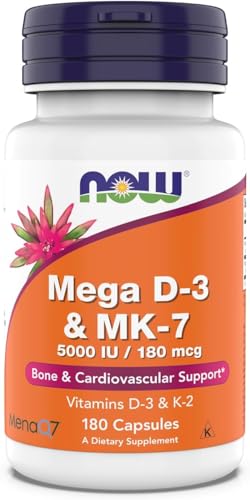
Look for vitamin D3 K2 MK7 softgels that offer a convenient, single-capsule dose. Many brands combine these two essential vitamins in an oil-based softgel for enhanced absorption.
For those who prefer flexibility in dosing, liquid vitamin D3 K2 drops are an excellent option. These often allow for precise adjustments and can be easily mixed into food or drinks.
If you have specific dietary needs, search for vegan vitamin D3 K2 supplements. These products typically use plant-derived D3 (from lichen) and K2 (from fermented chickpeas or bacillus subtilis natto).
Conclusion
For women aged 40-60, the choice between vitamin D3 alone and a D3+K2 combination is increasingly clear. The synergistic relationship between these two vitamins offers a more comprehensive and potentially safer approach to supporting critical health areas like bone density, cardiovascular health, and immune function. By ensuring calcium is not just absorbed but also properly directed, D3+K2 moves beyond basic supplementation to a truly optimized strategy for midlife wellness. As research continues to unfold, the evidence for this powerful duo only grows stronger, making it a cornerstone for proactive health management.
FAQ
What is the main difference between vitamin D3 alone and D3+K2?
Vitamin D3 helps absorb calcium, while vitamin K2 (specifically MK-7) activates the proteins that direct calcium into bone and inhibit its deposition in arteries. That mechanism is well established; randomised trials testing whether K2 actually slows arterial calcification have been mixed, with the largest finding no effect. D3 alone ensures absorption, but D3+K2 targets calcium routing as well.
Why is K2 important for women in perimenopause?
During perimenopause, declining estrogen accelerates bone loss. K2 helps activate proteins that integrate calcium into bone, improving bone mineral density and working with D3 to combat this age-related decline.
Can I get enough K2 from my diet?
While some K2 is found in fermented foods like natto, certain cheeses, and egg yolks, typical Western diets are often low in K2, especially the highly bioavailable MK-7 form. Supplementation is often necessary to achieve optimal levels.

Are there any risks to taking D3+K2?
Generally, D3+K2 is well-tolerated. However, individuals on anticoagulant medications (blood thinners) like warfarin should consult their doctor before taking K2, as it can interfere with these medications. K2 (MK-7) typically does not interfere with newer direct oral anticoagulants.
How much D3 and K2 should I take?
Dosages vary based on individual needs and deficiency status. A common recommendation is 1000-5000 IU of D3 paired with 90-180 mcg of K2 (MK-7) daily. Always consult a healthcare professional for personalized dosage advice and to monitor your vitamin D levels.
Does D3+K2 help with immune function?
Vitamin D3 is well-known for its immune-modulating properties. While K2’s direct role in immunity is less clear, its contribution to overall physiological balance and reduction of systemic inflammation can indirectly support a healthy immune system.
These statements have not been evaluated by the FDA. This product is not intended to diagnose, treat, cure, or prevent any disease.

References
- Aaseth JO, Finnes TE, Askim M, Alexander J. The Importance of Vitamin K and the Combination of Vitamins K and D for Calcium Metabolism and Bone Health: A Review. Nutrients (2024);16(15):2420. PMID 39125301
- Wei FF, Trenson S, Verhamme P, Vermeer C, Staessen JA. Vitamin K-Dependent Matrix Gla Protein as Multifaceted Protector of Vascular and Tissue Integrity. Hypertension (2019);73(6):1160-1169. PMID 31006332
- Knapen MH, Drummen NE, Smit E, Vermeer C, Theuwissen E. Three-year low-dose menaquinone-7 supplementation helps decrease bone loss in healthy postmenopausal women. Osteoporosis International (2013);24(9):2499-507. PMID 23525894
- Mott A, Bradley T, Wright K, et al. Effect of vitamin K on bone mineral density and fractures in adults: an updated systematic review and meta-analysis of randomised controlled trials. Osteoporosis International (2019);30(8):1543-1559. PMID 31076817
- Geleijnse JM, Vermeer C, Grobbee DE, et al. Dietary intake of menaquinone is associated with a reduced risk of coronary heart disease: the Rotterdam Study. Journal of Nutrition (2004);134(11):3100-5. PMID 15514282
- Diederichsen ACP, Lindholt JS, Møller S, et al. Vitamin K2 and D in Patients With Aortic Valve Calcification: A Randomized Double-Blinded Clinical Trial. Circulation (2022);145(18):1387-1397. PMID 35465686
- Hasific S, Oevrehus KA, Lindholt JS, et al. Effects of Vitamin K2 and D Supplementation on Coronary Artery Disease in Men: A RCT. JACC: Advances (2023);2(9):100643. PMID 38938724
- Jolliffe DA, Camargo CA, Sluyter JD, et al. Vitamin D supplementation to prevent acute respiratory infections: a systematic review and meta-analysis of aggregate data from randomised controlled trials. Lancet Diabetes & Endocrinology (2021);9(5):276-292. PMID 33798465
These statements have not been evaluated by the Food and Drug Administration. This information is not intended to diagnose, treat, cure, or prevent any disease. Content is for informational purposes only and is not medical advice; consult a qualified healthcare provider before starting any supplement. As an Amazon Associate we earn from qualifying purchases.