Are you among the millions of women navigating the complexities of perimenopause and beyond, concerned about maintaining strong bones, a healthy heart, and a robust immune system? Perhaps you’ve been taking vitamin D3 alone, diligently trying to support your health, but a nagging question lingers: is there more you could be doing? The synergistic relationship between vitamin D3 and vitamin K2 is increasingly recognized as a crucial partnership, offering a more complete approach to calcium metabolism and overall wellness.
This comprehensive guide, updated for 2026, will explore the science behind vitamin D3 and K2, explaining how these two fat-soluble vitamins work together to optimize your health, particularly as you age. We’ll examine the evidence, discuss the benefits, and provide practical insights for incorporating this powerful duo into your wellness routine.
FTC Disclosure: Please note that this article contains affiliate links. If you make a purchase through these links, VitaminD3K2Hub may earn a commission at no extra cost to you. This helps support our research and content creation.
What Is Vitamin D3+K2 and Why Are They a Team?
Vitamin D3 (cholecalciferol) is often called the “sunshine vitamin” because our skin produces it when exposed to sunlight. Its primary role is well-established: facilitating the absorption of calcium from the gut into the bloodstream.
However, simply absorbing calcium isn’t enough for optimal health. This is where vitamin K2, specifically menaquinone-7 (MK-7), steps in. Vitamin K2 acts as a crucial “traffic cop” for calcium, directing it to where it’s needed, like bones and teeth, and away from where it can be harmful, such as arteries and soft tissues.
The D3+K2 combination ensures that the calcium absorbed due to D3’s action is properly utilized. Without adequate K2, the increased calcium levels might not be effectively integrated into bone matrix and could potentially deposit in undesirable locations.
The Calcium-Routing Synergy Explained
The synergy between D3 and K2 hinges on their activation of specific proteins. Vitamin D3 stimulates the production of osteocalcin, a protein involved in bone mineralization, and Matrix Gla Protein (MGP), which inhibits calcium deposition in soft tissues.
For these proteins to become active and perform their functions, they require carboxylation, a process dependent on vitamin K2. Specifically, K2 activates osteocalcin, enabling it to bind calcium and integrate it into the bone matrix.[1][2]
Simultaneously, K2 activates MGP, preventing calcium from accumulating in arterial walls and other soft tissues. This dual action ensures calcium is directed to bone tissue while being kept out of arteries, supporting both bone and cardiovascular health.

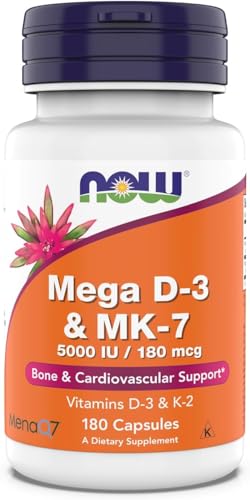


Bone Health: A Cornerstone for Women 40-60
Bone density naturally declines with age, a process significantly accelerated during perimenopause and menopause due to decreasing estrogen levels. This makes bone health a primary concern for women in their 40s, 50s, and 60s.
Vitamin D3 is essential for calcium absorption, the building block of bones. However, without sufficient vitamin K2, this absorbed calcium may not be optimally directed to the bone matrix.
Research indicates that vitamin K2, particularly the MK-7 form, plays a crucial role in bone mineral density. Studies have shown that MK-7 supplementation can improve bone strength and reduce the risk of fractures by activating osteocalcin, which incorporates calcium into bone.
For example, a three-year randomized controlled trial on postmenopausal women found that daily supplementation with MK-7 significantly improved bone mineral content and density, and bone strength, without increasing arterial calcification.[3][4]
Cardiovascular Health: Beyond Cholesterol
Cardiovascular disease remains a leading health concern for women, particularly post-menopause. While cholesterol levels are often the focus, arterial calcification, the hardening of arteries due to calcium deposits, is another significant risk factor.
Vitamin K2’s role in activating Matrix Gla Protein (MGP) is critical here. Activated MGP binds calcium in the artery wall and inhibits its deposition, which is the basis for the idea that K2 helps keep arteries flexible.
Several observational studies have linked higher dietary intake of vitamin K2 to a reduced risk of coronary heart disease and arterial calcification. A landmark Rotterdam Study, for instance, observed that high K2 intake was associated with a lower risk of aortic calcification and cardiovascular mortality.[5] Randomised trials have been less encouraging. The largest gave 720 mcg of MK-7 plus vitamin D to 365 older men for two years: it significantly improved the K2-dependent marker dp-ucMGP but did not slow aortic valve calcification, and coronary calcification did not differ from placebo.[6] A companion analysis found no significant reduction in coronary calcification progression.[7] A smaller trial in symptomatic coronary disease did report slower progression.[4]
While more large-scale intervention trials are needed to confirm these findings definitively, the mechanistic evidence strongly supports K2’s protective role in cardiovascular health, especially when combined with vitamin D3.
Immune Support and Other Emerging Benefits
Both vitamin D3 and K2 contribute to a robust immune system. Vitamin D3 is well-known for its immunomodulatory effects, supporting both innate and adaptive immunity.[8]
Emerging research suggests that vitamin K2 may also play a role in immune function, though the mechanisms are still being explored. It may influence inflammatory responses and cellular signaling pathways relevant to immunity.
Beyond bone and cardiovascular health, the D3+K2 combination is being investigated for other potential benefits. These include supporting healthy blood sugar metabolism, cognitive function, and even certain aspects of reproductive health, though research in these areas is still preliminary.

Deficiency Prevalence and Dietary Sources
Vitamin D deficiency is remarkably common, affecting an estimated 1 billion people worldwide. Factors like limited sun exposure, darker skin tones, and certain medical conditions contribute to this widespread issue.
While K2 deficiency is harder to quantify, typical Western diets often provide insufficient amounts. This is because K2 is primarily found in fermented foods and certain animal products.

| Vitamin | Primary Natural Sources | Common Deficiency Factors |
|---|---|---|
| Vitamin D3 | Sunlight exposure, fatty fish (salmon, mackerel), fortified dairy/cereals, egg yolks | Limited sun exposure, darker skin, obesity, malabsorption conditions, certain medications |
| Vitamin K2 (MK-7) | Natto (fermented soybeans), grass-fed dairy (butter, cheese), goose liver, egg yolks (from pastured hens), some fermented vegetables | Low intake of fermented foods, limited consumption of grass-fed animal products, certain antibiotics, malabsorption conditions |
For many, particularly those with dietary restrictions or specific health goals, supplementation becomes a practical and effective way to ensure adequate intake of both D3 and K2.
Choosing the Right D3+K2 Supplement
When selecting a D3+K2 supplement, there are several factors to consider to ensure you’re getting a quality product that meets your needs. The form of K2 is particularly important.
Look for supplements containing vitamin K2 as menaquinone-7 (MK-7), as this form has a longer half-life in the body and is more bioavailable than MK-4. The dosage of both D3 and K2 should be clearly stated.
Consider supplements that also include a healthy fat source, like olive oil or MCT oil, as both D3 and K2 are fat-soluble vitamins and are best absorbed when taken with fat. Always check for third-party testing to verify purity and potency.
For those searching for options, consider looking for products labeled as high potency vitamin D3 K2 MK-7, vegan vitamin D3 K2 supplement, or liquid vitamin D3 K2 drops based on your preference and dietary needs.
Safety and Considerations
Vitamin D3 and K2 are generally considered safe when taken within recommended dosages. However, individual needs can vary, and it’s always wise to consult with a healthcare professional before starting any new supplement regimen.
For instance, individuals on anticoagulant medications, such as warfarin, need to be particularly cautious with vitamin K supplements, as K2 can interfere with their action. Newer anticoagulants may not have the same interactions, but medical advice is essential.[9][10]
While vitamin D toxicity is rare, excessive doses can lead to hypercalcemia (high blood calcium levels), which can be harmful. Following recommended daily allowances and monitoring blood levels if advised by a doctor is prudent.[11][12]
Conclusion
The combined power of vitamin D3 and K2 offers a sophisticated approach to health, moving beyond the isolated benefits of individual nutrients. For women aged 40-60, this synergy is particularly relevant for supporting bone density, maintaining cardiovascular health, and bolstering immune function.
Understanding the calcium-routing mechanism and the distinct roles of D3 and K2 empowers you to make informed decisions about your supplement strategy. By choosing a high-quality D3+K2 combination, you can work towards a more complete and effective path to wellness.
Frequently Asked Questions
While Vitamin D3 is crucial for calcium absorption, it doesn’t ensure that calcium is directed to the right places. Without adequate Vitamin K2, the increased calcium can potentially deposit in arteries and soft tissues instead of being fully integrated into your bones.

MK-4 is a short-chain menaquinone found in some animal products with a shorter half-life, requiring larger, more frequent doses. MK-7 is a long-chain menaquinone, primarily found in fermented foods like natto, that has a much longer half-life, making it more effective at lower, once-daily doses for systemic benefits.
Dosages can vary based on individual needs, existing deficiencies, and health goals. Common supplement dosages often range from 2000-5000 IU of D3 and 90-200 mcg of K2 (as MK-7). It’s best to consult with a healthcare professional for personalized recommendations.
While K2 is present in some foods, especially natto, grass-fed dairy, and certain fermented vegetables, many Western diets are generally low in K2. Achieving optimal levels through diet alone can be challenging for some, making supplementation a practical option.
D3 and K2 are generally well-tolerated. However, individuals taking anticoagulant medications, such as warfarin, should avoid K2 supplements due to potential interactions. Always discuss any new supplements with your doctor, especially if you have underlying health conditions or are on medication.
These statements have not been evaluated by the FDA. This product is not intended to diagnose, treat, cure, or prevent any disease.
References
- Aaseth JO, Finnes TE, Askim M, Alexander J. The Importance of Vitamin K and the Combination of Vitamins K and D for Calcium Metabolism and Bone Health: A Review. Nutrients (2024);16(15):2420. PMID 39125301
- Wei FF, Trenson S, Verhamme P, Vermeer C, Staessen JA. Vitamin K-Dependent Matrix Gla Protein as Multifaceted Protector of Vascular and Tissue Integrity. Hypertension (2019);73(6):1160-1169. PMID 31006332
- Knapen MH, Drummen NE, Smit E, Vermeer C, Theuwissen E. Three-year low-dose menaquinone-7 supplementation helps decrease bone loss in healthy postmenopausal women. Osteoporosis International (2013);24(9):2499-507. PMID 23525894
- Vossen LM, de Leeuw PW, Schurgers LJ, et al. Two Years of Menaquinone-7 Supplementation and Coronary Artery Calcification: A Randomized Clinical Trial. JAMA Cardiology (2026);11(8):719-726. PMID 42268593
- Geleijnse JM, Vermeer C, Grobbee DE, et al. Dietary intake of menaquinone is associated with a reduced risk of coronary heart disease: the Rotterdam Study. Journal of Nutrition (2004);134(11):3100-5. PMID 15514282
- Diederichsen ACP, Lindholt JS, Møller S, et al. Vitamin K2 and D in Patients With Aortic Valve Calcification: A Randomized Double-Blinded Clinical Trial. Circulation (2022);145(18):1387-1397. PMID 35465686
- Hasific S, Oevrehus KA, Lindholt JS, et al. Effects of Vitamin K2 and D Supplementation on Coronary Artery Disease in Men: A RCT. JACC: Advances (2023);2(9):100643. PMID 38938724
- Jolliffe DA, Camargo CA, Sluyter JD, et al. Vitamin D supplementation to prevent acute respiratory infections: a systematic review and meta-analysis of aggregate data from randomised controlled trials. Lancet Diabetes & Endocrinology (2021);9(5):276-292. PMID 33798465
- Schurgers LJ, Teunissen KJ, Hamulyak K, et al. Vitamin K-containing dietary supplements: comparison of synthetic vitamin K1 and natto-derived menaquinone-7. Blood (2007);109(8):3279-83. PMID 17158229
- Violi F, Lip GY, Pignatelli P, Pastori D. Interaction Between Dietary Vitamin K Intake and Anticoagulation by Vitamin K Antagonists: Is It Really True? A Systematic Review. Medicine (Baltimore) (2016);95(10):e2895. PMID 26962786
- Marcinowska-Suchowierska E, Kupisz-Urbanska M, Lukaszkiewicz J, Pludowski P, Jones G. Vitamin D Toxicity – A Clinical Perspective. Frontiers in Endocrinology (2018);9:550. PMID 30294301
- Ross AC, Manson JE, Abrams SA, et al. The 2011 report on dietary reference intakes for calcium and vitamin D from the Institute of Medicine: what clinicians need to know. Journal of Clinical Endocrinology & Metabolism (2011);96(1):53-8. PMID 21118827
These statements have not been evaluated by the Food and Drug Administration. This information is not intended to diagnose, treat, cure, or prevent any disease. Content is for informational purposes only and is not medical advice; consult a qualified healthcare provider before starting any supplement. As an Amazon Associate we earn from qualifying purchases.