Navigating midlife and menopause often involves a renewed focus on nutritional support. Among the many nutrients discussed, vitamin D3 and vitamin K2 frequently come up together due to their interconnected roles in the body. Understanding how these two vitamins function, both individually and in combination, can help inform your health choices.
This article will explore what vitamin D3 and vitamin K2 are, why they are often considered together in a vitamin D3 K2 supplement, and what current evidence suggests about their combined actions. We aim to provide clear, evidence-based information without making unsubstantiated claims.
What is Vitamin D3?
Vitamin D3, also known as cholecalciferol, is a fat-soluble vitamin crucial for several bodily processes. It’s often referred to as the ‘sunshine vitamin’ because our skin can produce it when exposed to sunlight. However, factors like geographic location, time of year, skin pigmentation, and sunscreen use can affect natural vitamin D production.
Vitamin D3 (cholecalciferol), in 3D

| Formula | C27H44O |
|---|---|
| Molar mass | 384.6 g/mol |
| IUPAC name | (1S,3Z)-3-[(2E)-2-[(1R,3aS,7aR)-7a-methyl-1-[(2R)-6-methylheptan-2-yl]-2,3,3a,5,6,7-hexahydro-1H-inden-4-ylidene]ethylidene]-4-methylidenecyclohexan-1-ol |
Source: PubChem CID 5280795. Structure: PubChem computed 3D conformer; drag to turn it.
Figure: vitamind3k2hub.com: Vitamin D3 (cholecalciferol), in 3D
Embed this figure
Free to reuse on your site. Copy the code below; please keep the credit link.
Dietary sources of vitamin D3 include fatty fish, some fortified foods, and supplements. Once absorbed, vitamin D3 undergoes conversion in the liver and kidneys to its active form, calcitriol. This active form plays a significant role in calcium regulation within the body.
What is Vitamin K2?
Vitamin K is a group of fat-soluble vitamins, and vitamin K2 (menaquinone) is one of its forms. Unlike vitamin K1 (phylloquinone), which is primarily found in leafy green vegetables and is involved in blood clotting, vitamin K2 is found in fermented foods, some animal products, and can be produced by gut bacteria. There are several subtypes of K2, with MK-4 and MK-7 being the most commonly discussed in supplements.
Vitamin K2 plays a distinct role from K1, particularly in pathways related to calcium distribution. It helps activate certain proteins that manage calcium in the body, directing it to where it’s needed and away from where it might accumulate inappropriately.
The Synergistic Relationship: Why D3 and K2 are Often Combined
The idea of combining vitamin D3 and K2 in a vitamin D3 K2 supplement stems from their complementary actions within the body. While vitamin D3 is vital for calcium absorption, vitamin K2 appears to help manage where that calcium goes once absorbed.
Research has explored the combined effects of these vitamins. For instance, studies have evaluated synergistic combinations including cholecalciferol (D3) and menaquinone-7 (K2) for various metabolic considerations [1][2]. Another prospective study indicated that combined vitamin K2 and D3 therapy improved endoscopic fusion outcomes in individuals with osteoporotic lumbar degenerative disease [3]. The combined actions of these vitamins are a subject of ongoing scientific interest.

How a Vitamin D3 K2 Supplement May Support Midlife Health
During midlife and menopause, women often experience changes that bring bone health and cardiovascular well-being to the forefront. Vitamin D3 is well-recognized for its role in calcium absorption, which is fundamental for maintaining bone mineral density. Without adequate vitamin D3, the body cannot absorb calcium efficiently from the diet.
When considering a vitamin D3 K2 supplement, the rationale is that K2 may help direct the calcium absorbed with D3’s help. An animal study explored the effect of vitamin K and calcium on bone loss in ovariectomized rats, suggesting a potential role in bone health [4]. The combined approach is thought to offer a more comprehensive strategy for calcium metabolism.
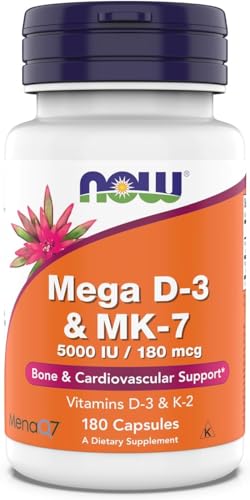


Considering a Vitamin D3 K2 Supplement
For women in midlife and menopause who are considering nutritional support, a vitamin D3 K2 supplement is often discussed. The combined presence of cholecalciferol (D3) and menaquinone-7 (K2) in formulations has been characterized in various delivery systems, indicating the development of such combinations for potential use [5].
When choosing a supplement, factors such as the specific forms of D3 and K2 (e.g., MK-7 for K2), dosage, and quality should be considered. It’s important to understand that while these nutrients work together, individual needs can vary.

References
- Evaluation of synergistic combination comprising magnesium orotate, menaquinone-7, and cholecalciferol for management of type 2 diabetes and dyslipidemia. Magnesium research, 2020
- Development, optimization and characterization of chewable tablet containing synergistic combination of magnesium orotate dihydrate with cholecalciferol and menaquinone-7 for management of hyperglycemia and its pharmacokinetic study. Magnesium research, 2021
- Combined vitamin K(2) and D(3) therapy improves endoscopic fusion outcomes in osteoporotic lumbar degenerative disease: a prospective study. Scientific reports, 2025
- Effect of vitamin K and calcium in bone loss in ovariectomized rats. Anais da Academia Brasileira de Ciencias, 2026
- Physical and turbidimetric properties of cholecalciferol- and menaquinone-loaded lipid nanocarriers emulsified with polysorbate 80 and soy lecithin. Food chemistry, 2021
These statements have not been evaluated by the Food and Drug Administration. This information is not intended to diagnose, treat, cure, or prevent any disease. Content is for informational purposes only and is not medical advice; consult a qualified healthcare provider before starting any supplement. As an Amazon Associate we earn from qualifying purchases.