Ready to buy? Check current prices on Amazon and compare deals before you decide.
Are you among the millions of women navigating the complexities of perimenopause and beyond, concerned about maintaining strong bones, a healthy heart, and robust immunity? Perhaps you’re already taking vitamin D3, diligently trying to support your well-being, but have you considered the crucial partner that ensures D3’s benefits truly reach their potential? The truth is, supplementing with vitamin D3 alone might be an incomplete strategy, potentially leaving vital calcium unguided and essential processes unoptimized.
Understanding the synergistic relationship between vitamin D3 and K2 is not just about adding another supplement; it’s about optimizing your body’s calcium utilization, ensuring it goes where it’s needed most, your bones, and stays out of where it can cause harm, your arteries. This comprehensive guide will explain why this powerful duo is essential, especially as you age, and help you choose the best D3+K2 supplements available in 2026.
FTC Disclosure: Please note that this article contains affiliate links. If you make a purchase through these links, VitaminD3K2Hub may earn a small commission at no extra cost to you. This helps support our research and content creation.
Why Vitamin D3 and K2 Are an Essential Duo for Health
Vitamin D3 is widely recognized for its role in calcium absorption, a fundamental process for bone health. It stimulates the production of calcium-binding proteins, making more calcium available in the bloodstream. However, without adequate vitamin K2, this increased calcium might not be directed appropriately.
Vitamin K2, particularly the MK-7 form, acts as a crucial “traffic controller” for calcium. It activates specific proteins, such as osteocalcin and matrix Gla protein (MGP), which guide calcium into bone tissue and prevent its deposition in soft tissues like arteries and kidneys. This synergy ensures calcium is utilized effectively for skeletal strength while simultaneously supporting cardiovascular health.[1][2]
The Calcium-Routing Synergy Explained
The primary mechanism hinges on the activation of vitamin K-dependent proteins. Vitamin D3 increases the synthesis of these proteins, but they remain inactive without sufficient vitamin K2. Once activated by K2, osteocalcin binds calcium and integrates it into the bone matrix, promoting mineralization.
Concurrently, activated MGP sequesters calcium from arterial walls, preventing calcification and maintaining arterial elasticity. This dual action highlights why combining D3 and K2 is more effective than taking D3 alone for comprehensive calcium management within the body.


Bone Health: Strengthening Your Skeleton with D3 and K2
Bone density naturally declines with age, a concern amplified for women during perimenopause and menopause due to decreasing estrogen levels. Vitamin D3 is essential for maximizing calcium absorption from the gut, providing the building blocks for bone. Studies consistently show that vitamin D deficiency is linked to reduced bone mineral density and an increased risk of fractures.

However, K2’s role is equally vital. Research indicates that vitamin K2 supplementation, particularly MK-7, can improve bone mineral density and reduce fracture risk by activating osteocalcin. The pooled trial evidence is more equivocal than that: a 2019 systematic review in Osteoporosis International found no clear effect of vitamin K on bone mineral density or vertebral fractures, and while clinical fractures were lower overall, the authors judged the evidence insufficient to confirm it.[3][4]
The combination ensures that the calcium absorbed due to D3 is properly integrated into the bone matrix, rather than circulating freely or depositing in undesirable locations. This targeted action is crucial for maintaining skeletal integrity as you age.
Cardiovascular Health: Protecting Your Arteries
Arterial calcification, the hardening of arteries due to calcium deposits, is a significant risk factor for cardiovascular disease. While vitamin D3 can increase circulating calcium, inadequate K2 can leave this calcium unmanaged, potentially contributing to soft tissue calcification.
Vitamin K2’s activation of matrix Gla protein (MGP) is central to preventing this. Activated MGP is a potent inhibitor of soft tissue calcification, actively binding to calcium crystals and preventing their formation in arterial walls. Clinical trials have shown that higher intake of vitamin K2 is associated with reduced arterial stiffness and a lower risk of cardiovascular events.
One notable Rotterdam Study observed a significant inverse association between dietary K2 intake and aortic calcification and coronary heart disease risk. This evidence underscores the protective role of K2 in maintaining arterial flexibility and cardiovascular wellness, especially when paired with D3.[5]
Immune Support and Beyond: A Broader Impact
Beyond bone and cardiovascular health, both D3 and K2 contribute to broader physiological functions. Vitamin D3 is a well-established immunomodulator, playing a critical role in both innate and adaptive immune responses. Adequate D3 levels are associated with a reduced risk of respiratory infections and autoimmune conditions.[6]
Emerging research also suggests that vitamin K2 may have immunomodulatory properties, though this area requires further investigation. Some studies indicate K2’s involvement in anti-inflammatory processes and cellular signaling. While not as direct as D3’s immune role, the overall health benefits of the D3+K2 synergy likely contribute to a more resilient system.

Navigating Perimenopause and Menopause with D3+K2
The perimenopausal and menopausal transitions are characterized by significant hormonal shifts, particularly a decline in estrogen, which accelerates bone loss. This makes the D3+K2 combination particularly relevant for women in the 40-60 age range. During this time, the risk of osteoporosis and cardiovascular disease increases substantially.
By optimizing calcium utilization, D3+K2 can help mitigate age-related bone density loss and support arterial health when these systems are most vulnerable. Ensuring adequate levels of both vitamins can be a proactive strategy to maintain quality of life and reduce long-term health risks associated with hormonal changes.

Choosing the Best D3+K2 Supplements (2026)
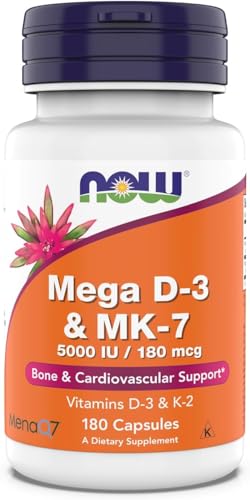
When selecting a D3+K2 supplement, several factors are important to consider to ensure efficacy and safety. The form of K2 is particularly crucial, with MK-7 being the most bioavailable and longest-acting form. MK-4 is another form, but it has a much shorter half-life and requires higher, more frequent dosing.[7][8]
Dosage ratios are also important. Common effective combinations typically range from 1,000-5,000 IU of D3 with 90-200 mcg of K2 (MK-7). Look for supplements that are third-party tested for purity and potency, ensuring they contain what the label claims and are free from contaminants.
Key Considerations for Supplement Selection
- Form of K2: Prioritize Menaquinone-7 (MK-7) for its superior bioavailability and longer half-life.
- D3 Dosage: Ensure the D3 dosage aligns with your needs, typically 2,000-5,000 IU for most adults. Consult your doctor for personalized recommendations based on blood tests.
- K2 Dosage: Aim for at least 90-180 mcg of MK-7 daily for optimal bone and cardiovascular benefits.
- Purity and Testing: Look for certifications like NSF, USP, or other independent third-party testing.
- Additional Ingredients: Be mindful of unnecessary fillers, artificial colors, or common allergens if you have sensitivities.
- Delivery Method: Capsules, softgels, or liquid drops are common. Choose what is easiest for consistent daily intake.
Comparison of D3+K2 Supplement Types
| Feature | Softgels/Capsules | Liquid Drops | Gummies |
|---|---|---|---|
| Convenience | Easy to take, precise dosing. | Flexible dosing, good for those who dislike pills. | Palatable, easy to chew. |
| Absorption | Generally good, especially with oil-based formulations. | Often excellent, direct absorption. | Variable, can contain more inactive ingredients. |
| Purity Potential | High, often fewer excipients. | High, often simple formulations. | Lower, may contain sugars, artificial flavors. |
| Dosing Flexibility | Fixed doses per unit. | Highly flexible, can adjust drop by drop. | Fixed doses per unit. |
| Target User | Most adults, seeking precise, pure doses. | Children, adults with swallowing difficulties, those needing precise micro-adjustments. | Those who prefer a pleasant taste and chewable format. |
Amazon Affiliate Section: What to Look For
When searching for D3+K2 supplements on platforms like Amazon, focus your search on specific product types rather than generic terms. Look for products that clearly state “Vitamin D3 K2 MK-7” to ensure you are getting the most bioavailable form of K2. You might search for “D3 K2 softgels” if you prefer a traditional capsule format, often containing D3 dissolved in an oil for better absorption.
Alternatively, if you prefer liquid formulations, search for “liquid D3 K2 drops” which offer flexible dosing and are often suitable for individuals who have difficulty swallowing pills. Always scrutinize product descriptions for third-party testing certifications and clear ingredient lists.
Conclusion
The evidence is clear: the synergy between vitamin D3 and K2 is foundational for optimizing calcium metabolism, supporting robust bone health, and protecting your cardiovascular system. For women in perimenopause and beyond, this combination offers a powerful strategy to counteract age-related declines and maintain overall vitality.
By understanding the mechanisms and carefully selecting a high-quality supplement with the right forms and dosages, you can ensure that your body is effectively utilizing calcium, directing it to your bones, and keeping it out of your arteries. Prioritize your long-term health by embracing the complete picture of vitamin D3 and K2 supplementation.
Frequently Asked Questions (FAQ)
What is the difference between K1 and K2?
Vitamin K1 (phylloquinone) is primarily found in leafy green vegetables and is essential for blood clotting. Vitamin K2 (menaquinone) is found in fermented foods and animal products, and is crucial for calcium metabolism, bone health, and cardiovascular health. They have distinct biological roles.
Can I get enough K2 from diet alone?
While some K2 is found in foods like natto, grass-fed dairy, and certain cheeses, achieving optimal therapeutic levels through diet alone can be challenging for many, especially the highly bioavailable MK-7 form. Supplementation is often recommended to ensure adequate intake.
What is the ideal D3 to K2 ratio?
There isn’t one universally “ideal” ratio, but common effective combinations often provide 1,000-5,000 IU of D3 with 90-200 mcg of K2 (MK-7). The specific needs can vary by individual, so consulting a healthcare professional is advisable.

Are there any side effects of D3+K2 supplementation?
At recommended doses, D3+K2 is generally well-tolerated. High doses of D3 can lead to hypercalcemia, but K2 helps mitigate this risk. Individuals on anticoagulant medications (like warfarin) should consult their doctor before taking K2, as it can interfere with blood clotting.
How long does it take to see benefits from D3+K2?
While some benefits, like improved D3 levels, can be observed within weeks, bone density and cardiovascular health improvements are long-term processes. Consistent supplementation over several months to years is typically needed to see significant structural benefits.
Should I take D3 and K2 together or separately?
Taking them together is ideal, as K2 helps direct the calcium that D3 enables the body to absorb. Many combined supplements are available, ensuring the synergistic effect is maximized. Taking them with a meal containing fat can enhance absorption.
These statements have not been evaluated by the FDA. This product is not intended to diagnose, treat, cure, or prevent any disease.
References
- Aaseth JO, Finnes TE, Askim M, Alexander J. The Importance of Vitamin K and the Combination of Vitamins K and D for Calcium Metabolism and Bone Health: A Review. Nutrients (2024);16(15):2420. PMID 39125301
- Wei FF, Trenson S, Verhamme P, Vermeer C, Staessen JA. Vitamin K-Dependent Matrix Gla Protein as Multifaceted Protector of Vascular and Tissue Integrity. Hypertension (2019);73(6):1160-1169. PMID 31006332
- Knapen MH, Drummen NE, Smit E, Vermeer C, Theuwissen E. Three-year low-dose menaquinone-7 supplementation helps decrease bone loss in healthy postmenopausal women. Osteoporosis International (2013);24(9):2499-507. PMID 23525894
- Mott A, Bradley T, Wright K, et al. Effect of vitamin K on bone mineral density and fractures in adults: an updated systematic review and meta-analysis of randomised controlled trials. Osteoporosis International (2019);30(8):1543-1559. PMID 31076817
- Geleijnse JM, Vermeer C, Grobbee DE, et al. Dietary intake of menaquinone is associated with a reduced risk of coronary heart disease: the Rotterdam Study. Journal of Nutrition (2004);134(11):3100-5. PMID 15514282
- Jolliffe DA, Camargo CA, Sluyter JD, et al. Vitamin D supplementation to prevent acute respiratory infections: a systematic review and meta-analysis of aggregate data from randomised controlled trials. Lancet Diabetes & Endocrinology (2021);9(5):276-292. PMID 33798465
- Schurgers LJ, Teunissen KJ, Hamulyak K, et al. Vitamin K-containing dietary supplements: comparison of synthetic vitamin K1 and natto-derived menaquinone-7. Blood (2007);109(8):3279-83. PMID 17158229
- Sato T, Schurgers LJ, Uenishi K. Comparison of menaquinone-4 and menaquinone-7 bioavailability in healthy women. Nutrition Journal (2012);11:93. PMID 23140417
These statements have not been evaluated by the Food and Drug Administration. This information is not intended to diagnose, treat, cure, or prevent any disease. Content is for informational purposes only and is not medical advice; consult a qualified healthcare provider before starting any supplement. As an Amazon Associate we earn from qualifying purchases.