Ready to buy? Check current prices on Amazon and compare deals before you decide.
Are you among the millions of women navigating the complexities of perimenopause and beyond, acutely aware of the shifting landscape of your bone density, cardiovascular health, and immune resilience? Perhaps you’ve diligently supplemented with vitamin D3 for years, yet a lingering question remains: are you truly optimizing its benefits, or could there be a missing piece to the puzzle? The answer often lies in the synergistic partnership with vitamin K2, a crucial nutrient that ensures calcium is directed to where it’s needed most, your bones, and away from where it can cause harm, like your arteries.
Understanding the optimal dosage of D3 and K2, when to take them, and critical safety considerations is paramount for anyone seeking to support their long-term health. This comprehensive guide, updated for 2026, will demystify the science behind this powerful combination, empowering you to make informed decisions about your supplementation strategy.
FTC Disclosure: This article may contain affiliate links. If you make a purchase through these links, we may earn a small commission at no extra cost to you. This helps support our research and content creation.
The D3+K2 Synergy: Why They Belong Together
Vitamin D3 is well-established for its role in calcium absorption in the gut. Without adequate D3, even a calcium-rich diet may not effectively contribute to bone health. However, simply absorbing calcium is only half the story; its proper distribution within the body is equally critical.
This is where vitamin K2, particularly the MK-7 menaquinone form, becomes indispensable. K2 activates specific proteins, such as osteocalcin and matrix Gla protein (MGP). Osteocalcin helps integrate calcium into the bone matrix, while MGP prevents calcium from depositing in soft tissues like arteries and kidneys.[1][2]
Research indicates that D3 increases the production of these K2-dependent proteins. Without sufficient K2, these proteins remain inactive, leading to a potential paradox where increased calcium absorption from D3 might, in theory, contribute to arterial calcification if K2 is lacking. This synergistic relationship is fundamental to understanding why a combined D3 K2 supplement is often superior to D3 alone.
Understanding Vitamin D3 Dosage: Current Recommendations and Considerations
The recommended daily allowance (RDA) for vitamin D3 is 600-800 International Units (IU) for most adults. However, many experts argue these levels are insufficient for optimal health, especially given the widespread prevalence of vitamin D deficiency.[3]
A blood test measuring 25-hydroxyvitamin D [25(OH)D] is the most accurate way to assess your vitamin D status. A level of 20 ng/mL (50 nmol/L) is generally considered sufficient, while many health organizations now advocate for optimal levels between 30-60 ng/mL (75-150 nmol/L). Achieving and maintaining these levels often requires supplementation beyond the RDA.[3][4]

Common supplemental dosages range from 1,000 IU to 5,000 IU daily for adults, with higher doses sometimes prescribed for individuals with significant deficiency under medical supervision. Factors like skin tone, sun exposure, geographic location, and body mass index can all influence individual vitamin D requirements.
Vitamin K2 Dosage: Focus on MK-7 and Optimal Intake
When discussing vitamin K2, it’s crucial to distinguish between its forms, primarily MK-4 and MK-7. While MK-4 has a shorter half-life and requires larger, more frequent doses, MK-7 (menaquinone-7) has a much longer half-life, allowing for once-daily dosing and more sustained levels in the blood.[5][6]
For general health and bone support, typical MK-7 dosages range from 90 mcg to 180 mcg daily. Some studies exploring specific bone density or cardiovascular benefits have utilized doses up to 360 mcg daily. The optimal dose can vary based on individual health status and dietary intake of K2-rich foods.[7][8]
Dietary sources of MK-7 include fermented foods like natto, a traditional Japanese soybean dish. However, achieving therapeutic levels solely through diet can be challenging for many Western diets, making supplementation a practical approach.
D3 K2 Combination Ratios: Finding the Balance
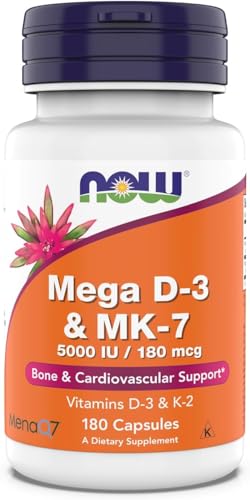
Given the synergistic action, many D3 K2 supplements offer a combined formulation. Common ratios often fall within the range of 1000-5000 IU of D3 paired with 90-180 mcg of MK-7. For example, a popular combination might be 5000 IU D3 with 100 mcg MK-7.

There isn’t a universally “perfect” ratio, as individual needs for both vitamins can vary. The key is ensuring sufficient K2 is present to activate the D3-induced proteins. Consulting with a healthcare provider to determine your specific D3 status and discuss K2 needs is always recommended.
When to Take Your D3+K2 Supplement
Both vitamin D3 and vitamin K2 are fat-soluble vitamins, meaning they are best absorbed when consumed with a meal containing dietary fat. Taking your D3+K2 supplement with your largest meal of the day, or at least a meal that includes some healthy fats (like avocado, nuts, seeds, or olive oil), can significantly enhance absorption.
Consistency is more important than the exact time of day. Establishing a routine, such as taking it with breakfast or dinner, helps ensure daily adherence. Some individuals prefer morning intake, while others find evening intake more convenient.
Vitamin K2 (MK-7) + D3 Dosage & Cost Calculator
Based on the labeled dose options for Live Conscious K2D3 (100mcg MK-7 + 5,000 IU D3) and the published 120-count bottle at $52.00.
Open the full dosage & cost calculator →
Estimate only – based on the current listed price of the 120-count Live Conscious K2D3 (100mcg MK-7 + 5,000 IU D3) bottle. Actual Amazon price can change; check the live price before buying.
Why no height/weight input? Unlike per-kg supplements (creatine, protein), Vitamin K2 (MK-7) + D3 has no published bodyweight-adjusted dosing in the research behind it. This calculator doesn’t fabricate a per-kg formula that doesn’t exist in the literature.
Get Live Conscious K2D3 (100mcg MK-7 + 5,000 IU D3) on Amazon(paid link) As an Amazon Associate we earn from qualifying purchases.
Safety Notes and Potential Interactions
While D3 and K2 are generally safe for most healthy adults when taken within recommended dosages, there are important safety considerations to keep in mind.
Vitamin D3 Toxicity
Excessive vitamin D3 intake can lead to toxicity, characterized by hypercalcemia (abnormally high blood calcium levels). Symptoms can include nausea, vomiting, weakness, frequent urination, and in severe cases, kidney problems. This is typically associated with very high doses, often exceeding 10,000 IU daily over prolonged periods, and rarely occurs from sun exposure or food sources alone.

Monitoring 25(OH)D levels periodically, especially when taking higher doses, is a prudent safety measure. The tolerable upper intake level (UL) for vitamin D is 4,000 IU daily for adults, although many experts consider up to 10,000 IU safe under medical supervision.[3][9]
Vitamin K2 and Anticoagulants
This is the most critical interaction to be aware of. Vitamin K, in all its forms, plays a vital role in blood clotting. Individuals taking anticoagulant medications, particularly warfarin (Coumadin), must exercise extreme caution with vitamin K2 supplementation. Warfarin works by interfering with vitamin K’s clotting mechanisms.
Even small, consistent doses of K2 can potentially counteract warfarin’s effects, increasing the risk of blood clots. If you are on warfarin or any other anticoagulant, it is absolutely essential to consult your doctor before starting any vitamin K2 supplement. Newer anticoagulants (DOACs) generally do not interact with vitamin K in the same way, but medical advice is still paramount.[5][10]
Other Considerations
Individuals with certain medical conditions, such as hyperparathyroidism, sarcoidosis, or kidney disease, should consult their physician before supplementing with D3 or K2. Some medications, like certain diuretics or corticosteroids, can also affect vitamin D metabolism.
D3 K2 for Perimenopause and Beyond: Specific Benefits
The perimenopausal and postmenopausal stages are characterized by significant hormonal shifts, particularly a decline in estrogen, which accelerates bone loss. This makes bone health a primary concern for women aged 40-60.
Bone Density and Fracture Risk
Vitamin D3 and K2 work synergistically to support bone mineralization. D3 enhances calcium absorption, while K2 directs that calcium to the bones by activating osteocalcin. Studies, including those focused on postmenopausal women, suggest that combined D3 and K2 supplementation may contribute to improved bone mineral density and reduce the risk of fractures by optimizing calcium utilization.[7][11][12]
Cardiovascular Health
Cardiovascular disease risk also increases significantly after menopause. The role of vitamin K2, particularly MK-7, in preventing arterial calcification is a key area of research. By activating MGP, K2 helps inhibit calcium deposition in the arteries, which is a major contributor to arterial stiffness and cardiovascular events. The mechanism is well documented, but the clinical results are mixed: the largest randomised trial gave 720 mcg of MK-7 plus vitamin D to 365 older men for two years and found no slowing of aortic valve calcification and no difference in coronary calcification, despite a clear improvement in the K2-dependent marker dp-ucMGP.[13] It is worth knowing that before treating cardiovascular protection as a settled reason to supplement.

Immune Support
Vitamin D3’s role in modulating the immune system is well-documented, supporting both innate and adaptive immunity. While K2’s direct role in immunity is less understood than D3’s, its overall contribution to cellular health and reducing inflammation may indirectly support immune function, creating a more robust physiological environment.
Product Selection: What to Look For
When choosing a D3+K2 supplement, consider these factors:
| Feature | Description |
|---|---|
| Form of K2 | Prioritize MK-7 (Menaquinone-7) for its superior bioavailability and longer half-life. |
| D3 Source | Look for Cholecalciferol (D3) as it is the most effective form for increasing blood vitamin D levels. |
| Dosage | Ensure the D3 and K2 dosages align with your needs (e.g., 5000 IU D3 with 100-180 mcg MK-7). |
| Third-Party Testing | Choose brands that conduct third-party testing for purity and potency. |
| Allergens/Additives | Check for unwanted fillers, artificial colors, or common allergens if you have sensitivities. |
You can find a variety of reputable D3 K2 combination supplements by searching for terms like: “vitamin D3 K2 supplement MK-7”, “D3 K2 bone health”, or “vitamin D3 K2 perimenopause support”.

Conclusion
The strategic combination of vitamin D3 and K2 represents a powerful approach to supporting bone, cardiovascular, and immune health, particularly for women navigating the perimenopausal transition. By understanding their synergistic roles and adhering to appropriate dosages and safety guidelines, you can harness the full potential of these essential nutrients.
Always remember to consult with your healthcare provider to tailor your supplementation strategy to your unique health profile and to monitor your vitamin levels, ensuring both efficacy and safety.
These statements have not been evaluated by the FDA. This product is not intended to diagnose, treat, cure, or prevent any disease.
Frequently Asked Questions (FAQ)
Q1: Can I take vitamin D3 and K2 separately instead of a combined supplement?
A1: Yes, you can take D3 and K2 separately. However, a combined D3 K2 supplement ensures that both nutrients are taken together, optimizing their synergistic action and often simplifying your supplement routine. The key is to ensure both are consumed with a fat-containing meal for best absorption.
Q2: How long does it take to see benefits from D3+K2 supplementation?
A2: The timeline for observing benefits can vary. Improvements in vitamin D levels can often be seen within weeks to a few months of consistent supplementation. Bone density changes typically take much longer, often 6-12 months or more, as bone remodeling is a slow process. Cardiovascular benefits related to arterial calcification prevention are long-term effects.
Q3: Is there a vegan D3+K2 supplement available?
A3: Yes, vegan options are available. Look for vitamin D3 derived from lichen (rather than lanolin from sheep’s wool) and vitamin K2 (MK-7) which is typically fermented from chickpeas or natto. Always check the product label for specific vegan certifications.
Q4: Can I get enough K2 from my diet alone?
A4: While K2 is present in fermented foods like natto, certain cheeses, and egg yolks, achieving optimal therapeutic levels, particularly of MK-7, can be challenging through diet alone for many individuals, especially those on Western diets. Natto is a potent source, but its consumption is not widespread. Therefore, supplementation is often a practical way to ensure adequate K2 intake.
Q5: What are the signs of vitamin D deficiency?
A5: Common signs of vitamin D deficiency can be subtle and include fatigue, muscle weakness or aches, bone pain, frequent illness, and mood changes. However, a blood test for 25-hydroxyvitamin D [25(OH)D] is the only definitive way to diagnose a deficiency.
Q6: Are there any specific D3+K2 supplements recommended for perimenopausal women?
A6: While no specific “perimenopause” labeled D3+K2 supplement is distinct, women in this age group should look for supplements providing a robust dose of D3 (e.g., 2000-5000 IU) and MK-7 (e.g., 90-180 mcg) to support bone density, cardiovascular health, and immune function during this critical life stage. Always consult with a healthcare provider to determine the best dosage for your individual needs.


References
- Aaseth JO, Finnes TE, Askim M, Alexander J. The Importance of Vitamin K and the Combination of Vitamins K and D for Calcium Metabolism and Bone Health: A Review. Nutrients (2024);16(15):2420. PMID 39125301
- Wei FF, Trenson S, Verhamme P, Vermeer C, Staessen JA. Vitamin K-Dependent Matrix Gla Protein as Multifaceted Protector of Vascular and Tissue Integrity. Hypertension (2019);73(6):1160-1169. PMID 31006332
- Ross AC, Manson JE, Abrams SA, et al. The 2011 report on dietary reference intakes for calcium and vitamin D from the Institute of Medicine: what clinicians need to know. Journal of Clinical Endocrinology & Metabolism (2011);96(1):53-8. PMID 21118827
- Holick MF, Binkley NC, Bischoff-Ferrari HA, et al. Evaluation, treatment, and prevention of vitamin D deficiency: an Endocrine Society clinical practice guideline. Journal of Clinical Endocrinology & Metabolism (2011);96(7):1911-30. PMID 21646368
- Schurgers LJ, Teunissen KJ, Hamulyak K, et al. Vitamin K-containing dietary supplements: comparison of synthetic vitamin K1 and natto-derived menaquinone-7. Blood (2007);109(8):3279-83. PMID 17158229
- Sato T, Schurgers LJ, Uenishi K. Comparison of menaquinone-4 and menaquinone-7 bioavailability in healthy women. Nutrition Journal (2012);11:93. PMID 23140417
- Knapen MH, Drummen NE, Smit E, Vermeer C, Theuwissen E. Three-year low-dose menaquinone-7 supplementation helps decrease bone loss in healthy postmenopausal women. Osteoporosis International (2013);24(9):2499-507. PMID 23525894
- Vossen LM, de Leeuw PW, Schurgers LJ, et al. Two Years of Menaquinone-7 Supplementation and Coronary Artery Calcification: A Randomized Clinical Trial. JAMA Cardiology (2026);11(8):719-726. PMID 42268593
- Marcinowska-Suchowierska E, Kupisz-Urbanska M, Lukaszkiewicz J, Pludowski P, Jones G. Vitamin D Toxicity – A Clinical Perspective. Frontiers in Endocrinology (2018);9:550. PMID 30294301
- Violi F, Lip GY, Pignatelli P, Pastori D. Interaction Between Dietary Vitamin K Intake and Anticoagulation by Vitamin K Antagonists: Is It Really True? A Systematic Review. Medicine (Baltimore) (2016);95(10):e2895. PMID 26962786
- LeBoff MS, Chou SH, Ratliff KA, et al. Supplemental Vitamin D and Incident Fractures in Midlife and Older Adults. New England Journal of Medicine (2022);387(4):299-309. PMID 35939577
- Bolland MJ, Grey A, Avenell A. Effects of vitamin D supplementation on musculoskeletal health: a systematic review, meta-analysis, and trial sequential analysis. Lancet Diabetes & Endocrinology (2018);6(11):847-858. PMID 30293909
- Diederichsen ACP, Lindholt JS, Møller S, et al. Vitamin K2 and D in Patients With Aortic Valve Calcification: A Randomized Double-Blinded Clinical Trial. Circulation (2022);145(18):1387-1397. PMID 35465686
These statements have not been evaluated by the Food and Drug Administration. This information is not intended to diagnose, treat, cure, or prevent any disease. Content is for informational purposes only and is not medical advice; consult a qualified healthcare provider before starting any supplement. As an Amazon Associate we earn from qualifying purchases.